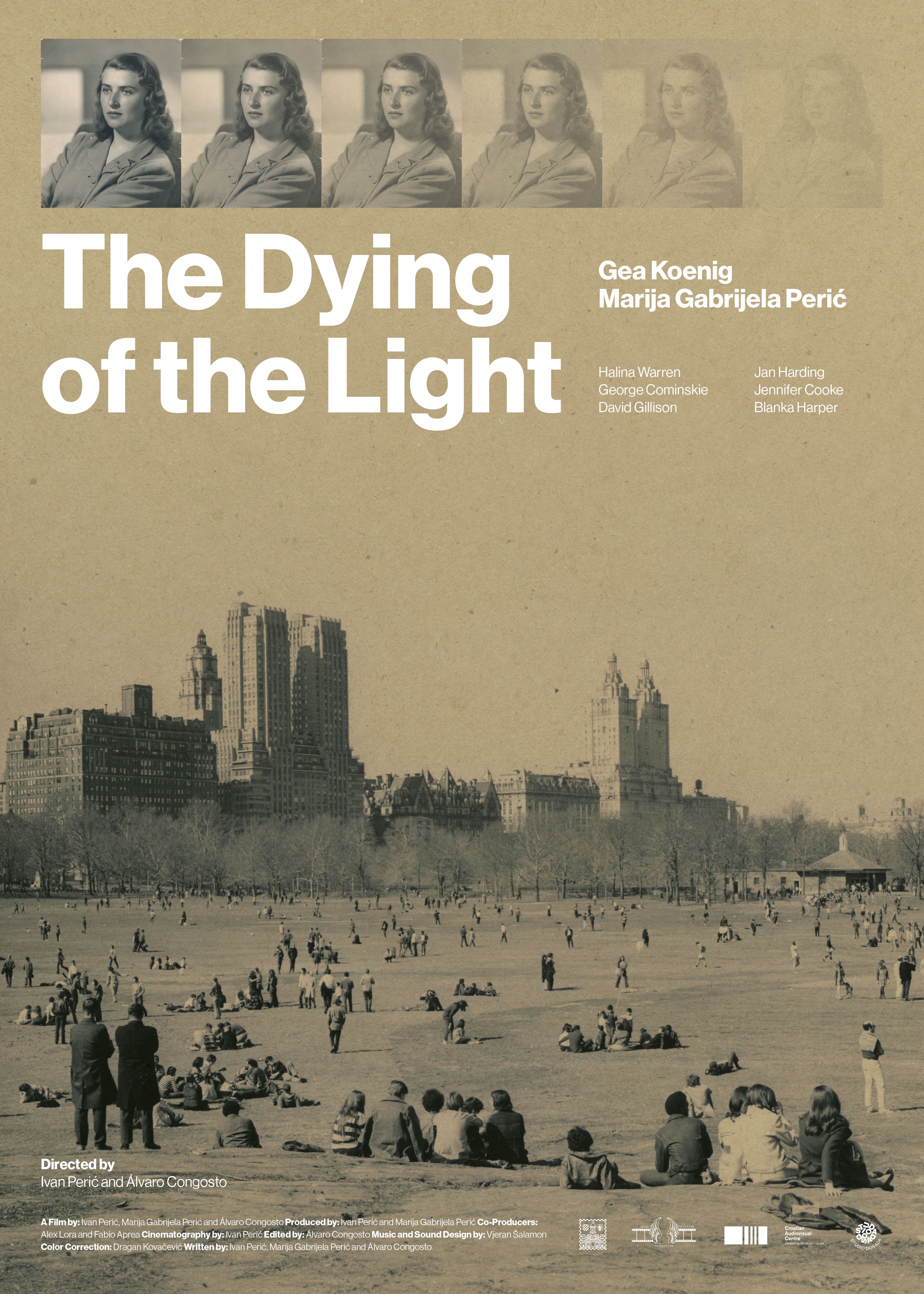
The Dying of the Light


Gabrijela travels to New York to collect her late great aunt Gea's belongings, who was a photographer, from the iconic artists' residence, Westbeth. In the process, she discovers more about Gea's life, immersing herself in her captivating photography and the personal belongings that reveal Gea's world. As Gabrijela delves deeper, she comes to a profound realization about the transient nature of life. "The Dying of the Light" is a poignant exploration of the passage of time, the enduring power of art, and the impermanence of our existence.
Gabrijela's quest to retrieve her late great aunt Gea's belongings, who was a photographer, at the iconic Westbeth artists' residence leads her to a profound exploration of life's impermanence through art and memory.
"The Dying of the Light" is a deeply personal exploration of memory, art, and the delicate threads that connect our lives across time. When Gabrijela enters Westbeth, an iconic artistic sanctuary, she isn't just stepping into her great aunt Gea’s world; she’s stepping into a dialogue between the past and the present, the living and the departed. Through Gea’s photography, Gabrijela begins to understand that art is a bridge, offering glimpses of lives that have come and gone, yet continue to resonate in the spaces they leave behind.
This film is not only about what we leave to others, but also about how we are transformed by what is left to us. Gabrijela's journey reveals the bittersweet beauty of impermanence—how time reshapes us, how memory distorts and clarifies, and how the act of creation, like Gea’s photographs, can outlast its maker, holding moments suspended long after they have passed.
At its heart, The Dying of the Light is a meditation on the ephemerality of life. It explores how we hold onto fleeting moments and what it means to truly live in the face of inevitable change. Our hope is that this film will encourage viewers to reflect on the traces we leave behind—whether through art, relationships, or the impact we have on those who come after us—and to find solace in the knowledge that, even as the light fades, something of us endures.